
Documents in Polk County Deed Records
Deeds, security deeds, liens, and plats all reach the Polk County Clerk of Superior Court. UCC filings reach the same office. That office is the recorder for land instruments. Each deed record shows what was filed. It shows when it entered the public record and how the clerk indexed the instrument. The type label matters. A conveyance, a debt instrument, and a release each do different legal work.
| Deed Type | What It Does | Common Use |
|---|---|---|
| Warranty deed | Transfers an interest with stated title promises | Ordinary purchase transfer |
| Limited warranty deed | Limits promises to a stated period or scope | Entity or fiduciary conveyance |
| Quitclaim deed | Conveys whatever interest the grantor holds without a title promise | Changing or clearing a claimed interest |
| Executor or administrator deed | Transfers estate property through a fiduciary | Probate-related transfer |
| Security deed | Secures a debt against land | Georgia real-estate financing |
A security deed secures a debt rather than passing title. Assignments, cancellations, releases, easements, lis pendens, and plats may need separate searches under the same parties and parcel description.
The Polk Kofile Deed Window
The Polk Kofile QuickLink offers remote deed indexes for 1969 through 1979 and plat index books spanning 1940 through 2020. Those years describe the online collection only. They are not the county's full recording history. Search fields include Type, Year, Parties, Last Name, and First Name, plus Book, Volume, and Page when a citation is already known.
| Index field | Input | Use |
|---|---|---|
| Type and Year | Deeds or plats and listed year | Select the historic index book |
| Parties | Grantor or grantee | Choose a transfer role |
| Last and First Name | Indexed party text | Narrow the book entries |
| Book, Volume, Page | Known citation | Retrieve a referenced record |
View the official Polk Kofile interface before comparing its controls with the capture.
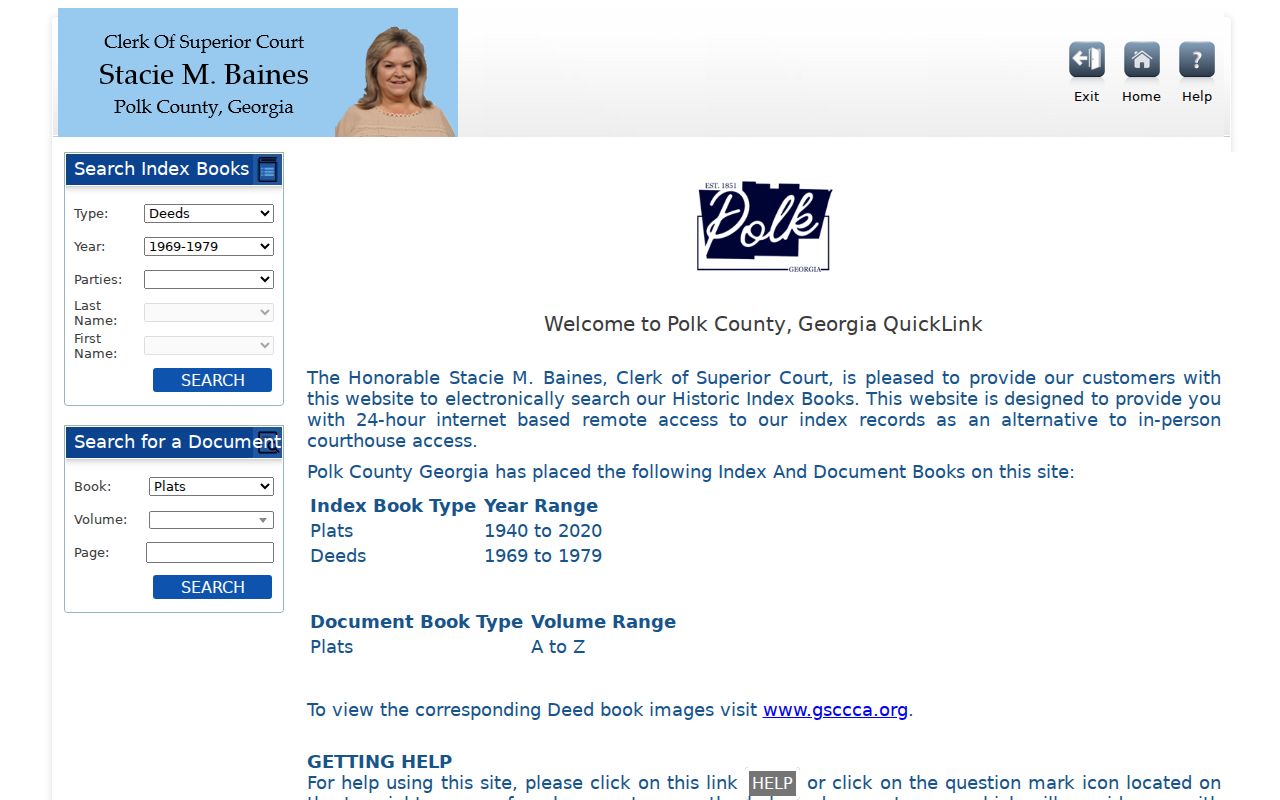
Year and party selectors reward preparation. Knowing the transfer window and the correct role narrows a Polk deed search before the first click.
Build a Polk Grantor-Grantee Chain
The grantor conveys the interest. The grantee receives it. Begin with the current owner of record from the assessor roll, but treat the newest deed as the recording anchor when a sale is fresh. At every step, match the legal description so a similar name cannot drag the chain onto different land.
- Search the current owner as grantee, including exact trust, estate, or company forms.
- Open the newest plausible deed and compare its land description and recording reference.
- Copy the grantor's indexed name, then search that party as an earlier grantee.
- Repeat until the remote index ends, then continue at the clerk terminal or in physical books.
- Grantor
- The party transferring the stated interest.
- Grantee
- The party receiving the stated interest.
- Chain of title
- The linked sequence of conveyances affecting the same land.
- Book and page
- A volume citation used to retrieve a recorded instrument.
- Instrument number
- A separate document identifier used by some records systems.
Broaden a Polk County Deed Search
The GSCCCA consolidated search stretches well past the Kofile deed span. Its real-estate side searches by name and book/page. For participating counties, a property search can also run on subdivision, unit, block, and lot. Premium tiers add more. Instrument type, street address, and map options sit behind the paid login, and PT-61 plus sales-price data can bridge a deed to an assessment sale line. A muddled remote result needs the counter. The Polk Clerk's office at 100 Prior Street, Suite 106 in Cedartown keeps weekday hours of 8:30 a.m. to 5 p.m. Inspect the official GSCCCA menu.
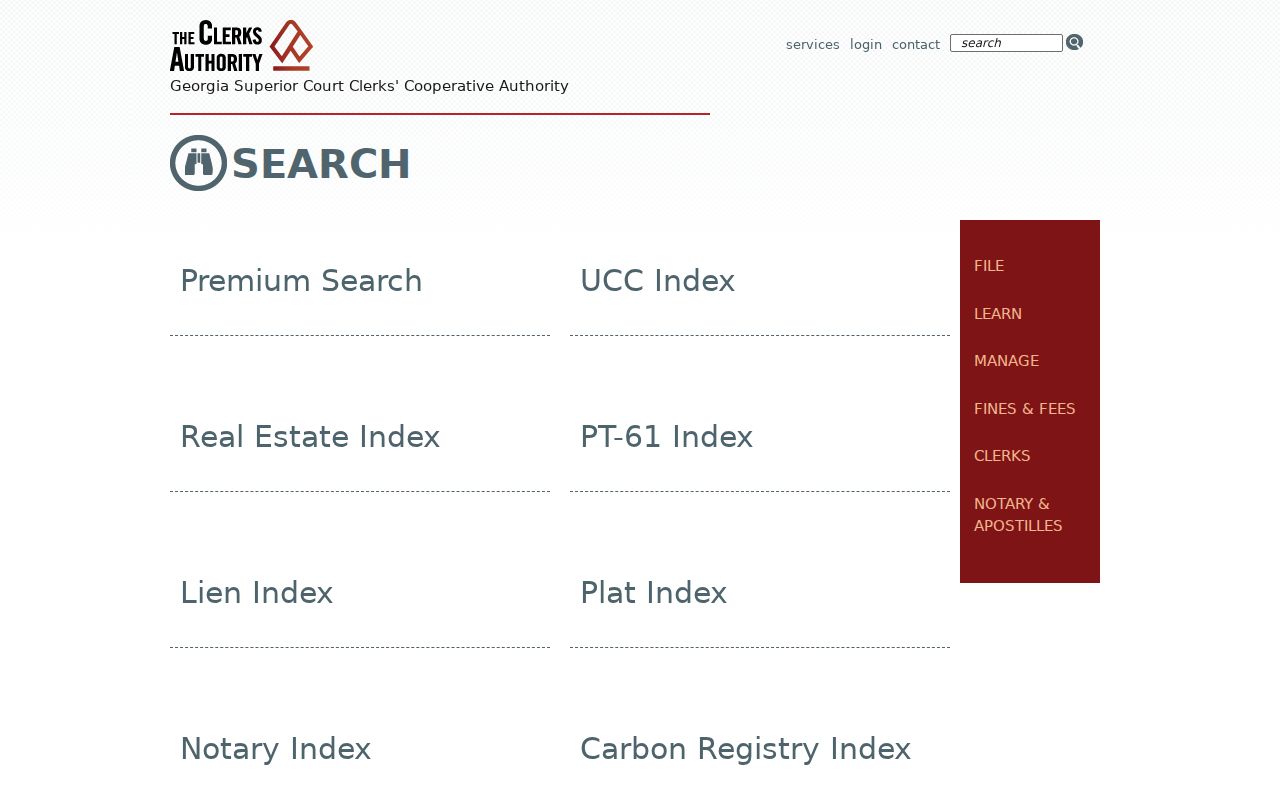
The menu separates basic party and citation searches from premium property-oriented modes.
Request a Polk County Deed Copy
A strong copy request names Polk County, the grantor and grantee, the approximate recording date, the instrument type, and the book/page or document number. Kofile handles physical copies of selected records. The clerk also links GSCCCA eCertification for digital certified documents. Fees need confirming. The clerk publishes no current copy-fee schedule, so confirm the cost before ordering. An ordinary image suits personal research. A certified copy carries the custodian's certification for formal use. Neither form means the clerk has ruled on the instrument's legal effect.
Recorded is not guaranteed. An index entry proves that an instrument was recorded, not that title is clear or every interest has been found.
Polk Liens Need Their Own Search
A tidy deed sequence can still hide burdens. Liens ride on separate instruments. Search security deeds, assignments, cancellations, mechanic's liens, tax executions, judgment liens, lis pendens, easements, rights of way, and UCC fixtures one by one. A payoff or court result often produces a later release or satisfaction carrying its own citation. GSCCCA's real-property system runs direct and reverse lien searches. County and statewide filters, book/page, and instrument type narrow the field. Index rows summarize. Reservations, exhibits, exceptions, and release terms may never reach that summary, so read the actual image.
FANS Watches Future Polk Filings
The free Filing Activity Notification System watches for new clerk index activity matching selected names or property details. Enroll, and notices arrive when filings match. FANS monitors the front door, not the old chain. Notices depend on clerk transmissions, and completeness, accuracy, and currency carry no guarantee. For enrollment details, review the official FANS service.
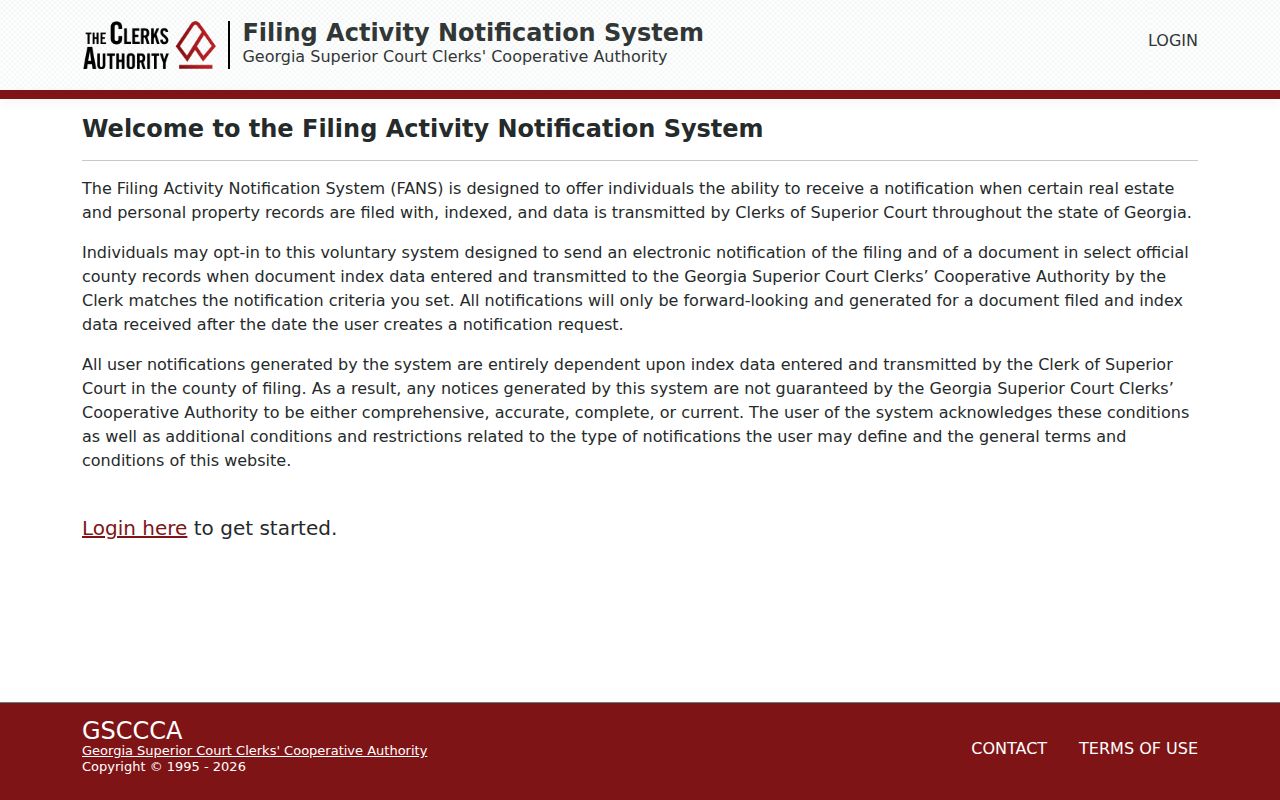
An alert is a prompt, not a conclusion. Pull the indexed instrument itself through the clerk before assuming what was filed.
Older Polk Deeds Cross Archives
Polk County dates to 1851. It was carved from land that included parts of Paulding and Floyd counties. Old chains therefore wander. A pre-1851 deed may sit in a parent county's books. Clerk records, courthouse terminals, GSCCCA, Georgia Archives finding aids, and historic maps form the fallback route when the remote index misses the target year. Archival finds happen. A Kofile preservation case study reports an 1851 landlocked map and an original subdivision plat on fabric recovered while working with Polk records. That story argues for checking physical and archival holdings when a chain breaks, and it hardly means the whole early record set is online.
Polk Plats Guard Against Drift
A Polk County deed may describe land by subdivision, lot, block, and plat book/page. Rural tracts differ. They lean on land lot, district, section, or metes and bounds. Details anchor the search. They keep a party-name lookup tied to the correct parcel in Polk County. Kofile's online span runs wide. It holds plat indexes from 1940 through 2020 and document books A through Z. The GSCCCA real-property overview lays out plat name and book/page routes. A tax map orients the parcel. But the recorded deed and plat control the record trail. Boundary disputes need a current survey and qualified advice.
Polk Assessment Cards Point to Deeds
A qPublic lookup in Polk County hands you the owner of record, the parcel number, the legal description, and whatever sale history the roll carries. The DCA appraisal sample goes further. It lists sale date, sale price, grantor, grantee, reason, deed book and page, and plat book and page. That combination makes the appraisal a quick bridge into deed records. Just remember what it is. An appraisal extract is not the recorded instrument itself.
The sample even contains unqualified transfers and a zero-dollar sale. So never treat a sale line as a market purchase until you check its reason code and the deed behind it. Take the book and page into the clerk index. Match the parties and the land description there. If the qPublic owner has not budged after a recent closing, the newest deed may simply run ahead of the annual tax roll update.
Estate Transfers Change Polk Deed Trails
Death does not always produce an ordinary buyer-and-seller deed in Polk County. Probate Court may hold the will, the administration file, or a fiduciary appointment. Meanwhile the Superior Court deed index may show an executor deed, an administrator deed, an affidavit, a quitclaim, or another instrument recorded against the land. A beneficiary named in probate is not automatically the owner of record.
So search the decedent, the estate caption, the executor or administrator, and any trustee. Search later grantees too. Then compare the parcel identifier and legal description, not just the street address. A trust can skip probate entirely. In that case the title trail runs through a trustee and a recorded trust-related deed. It never runs through a will file.
Keep a Polk Deed Search Log
Write down each query exactly as you ran it. Note the portal, the county filter, and the party spelling. Include the grantor or grantee role and the date range. Log the result citation and whether you viewed the image. Save the legal description and the prior-reference clause from every candidate deed. That builds a reproducible trail, and it makes any gap visible instead of invisible.
When two records conflict, rank each piece of evidence by what it truly proves. A newspaper notice can surface a parcel or plat citation. A tax card can supply the current map key. The filed deed and its referenced plat carry the authoritative land-record terms. A court order can settle a dispute outright. None of these should quietly replace another, and every source date belongs in your log.
For names, try initials, full names, punctuation, former surnames, and exact entity captions. Search both sides of the transfer where the index allows. If an image will not load, record the result reference. Request that exact instrument at the counter. A blank online result can reflect coverage gaps, spelling, or access limits rather than a missing deed. That caution matters most outside Kofile's narrow Polk deed window.